Need a tow? Roadside assistance in Thousand Oaks, CA - or a fix on the spot
Most roadside trouble in Thousand Oaks ends where it started: a battery cooked in a sunny lot, a tire torn on the Conejo Grade, a tank run dry on Kanan Road, keys shut in at a trailhead. We fix these on the spot, and if a fix will not hold, the tow truck that brought the tools takes the car.
A car that will not go in Thousand Oaks: sorting the fix by sound and location
A stalled car can mean a dozen different jobs, and roadside assistance in Thousand Oaks starts by narrowing them down. Before a tow truck leaves, day or night, we need two answers from you - how the car responds when you try it, and where it sits - because those decide what gets loaded.
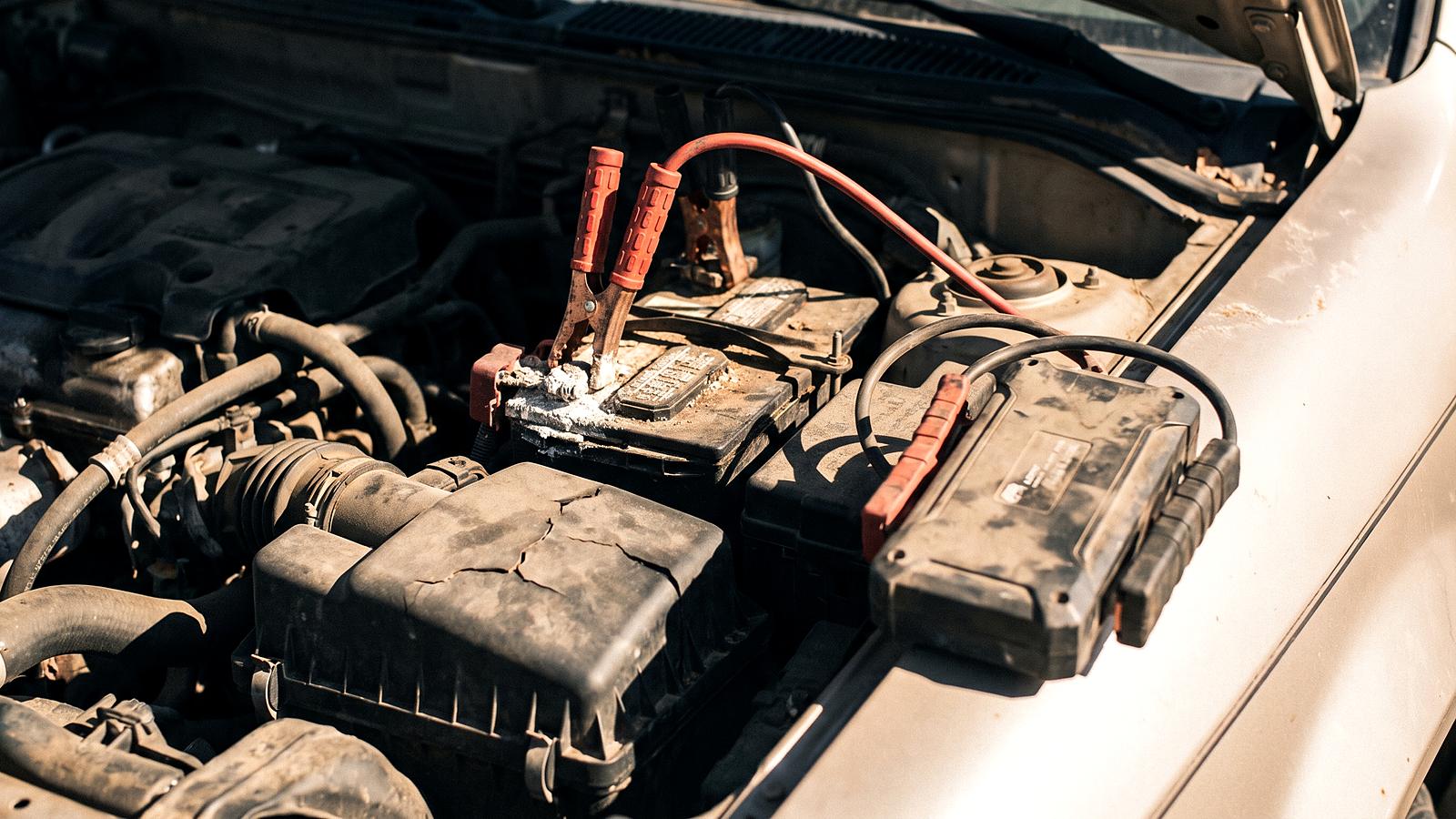
Turn the key and listen, because the sound usually names the fault. A lone click, or silence under faint dash lights: the 12-volt battery is spent, and a jump pack will do. The starter spinning hard while the engine never fires: fuel or spark is missing, and a jump pack cannot supply either. A rhythmic thump with the steering wheel tugging toward the curb: a tire is breaking up.
Then the spot. In Lang Ranch or Dos Vientos, the street name plus the nearest cross street does it. On the 101 we need your direction plus the exit number you saw last: 40 Westlake Boulevard, 41 Hampshire Road, 42 Rancho Road or 43 for the 23 north, 44 Moorpark Road, 45 Lynn Road, 46 Ventu Park Road, 47A and 47B for Rancho Conejo Boulevard and Borchard Road, and 47C Wendy Drive. Beyond Wendy Drive the road climbs the Conejo Grade, and the next exit is 50, Camarillo Springs Road; tell us if you stopped on the climb or over the summit.
Aboard for the trip: chocks and a jack, a jump pack, an impact gun, a can of the fuel your car burns, and lockout tools. Before we leave, you hear the price of the visit and when to expect us. Most jobs end right there, and because the gear rides on a tow truck, one that does not becomes a tow without a second trip.
Dead battery in a Wildwood driveway: why a roadside visit costs less than a tow
Price a Wildwood driveway jump against a tow of the same car across town and the jump comes out cheaper. The visit is billed as one job: the drive out, the minutes at the car, the work itself. A tow stacks the hook-up on top, then charges for every mile the car spends on the tow truck.
State law has nothing to say about the price of a jump you ask for. Its one yardstick, in CVC 22658, is for private-property tows: a charge there is excessive when it tops the greater of the law-enforcement tow rate and the CHP-approved rate for the jurisdiction, and the CHP sets that rate Area by Area without publishing it. For a service you request, the figure you accept on the phone is the whole deal; the price of a jump or tire change set against a tow goes deeper.
The quote shifts with three things:
- Distance. Every mile between our tow truck and your car is driven twice, so a call from The Oaks on Hillcrest Drive costs less than one from the foot of Decker Canyon or the middle of Kanan Road; a stubborn lockout or a rusted-on lug nut adds minutes at the car as well.
- A relapse. Batteries sometimes give out again a block later; when that happens you get a tow price first, and the wheels come up only after you accept it.
- The free patrol. Weekdays from 6:30 to 9:30 a.m. and 2 to 6 p.m., the Ventura County Freeway Service Patrol handles jumps, flats and a gallon of gas on the 101 between the county line and Camarillo Springs Road; dial 5-1-1. It does not cover nights, weekends, the 23 or surface streets.
Four ways a car stalls in Thousand Oaks, and the fix for each
Batteries after a hot summer
Our busiest season for jump starts is summer. AAA lists heat as the leading cause of battery failure, because hot weather hastens fluid loss and corrodes the parts inside. With Thousand Oaks on record at 119 degrees, a battery that baked through August in The Oaks lot has had a rough stretch, and it tends to fail on the first cool mornings that follow.
A jump only proves the battery will take a charge for a moment; the real test is whether the car keeps running. So before we leave, with the engine going on the pack's power, we check that the alternator is charging. If it is, a long drive refills the battery, where a trip to the corner would not. If a cell has died or the alternator has failed, the car is running on borrowed charge and will stall before it gets far, and the next step is towing it to a shop.
A tire that gives out
Got a spare? Then the job runs chocks under the wheels, jack up, flat off, spare on, lug nuts tightened to the maker's torque figure, and a pressure check, since a spare that has ridden in the trunk for years is usually low. That temporary tire is designed for short hops at modest speed. Its next trip should be to a tire shop; save the climb over the Grade to Camarillo for a proper tire.
Plenty of newer cars carry no spare at all. A run-flat keeps going for a limited distance with no air inside, which is why a TPMS warning on the dash is often the first and only hint. An inflator kit plugs a nail hole in the tread but cannot help a torn sidewall. Without a spare, and with a tire that keeps going flat, the answer is a ride on the tow truck to a tire shop.
The Conejo Grade shoulder sits on a 7 percent slope with traffic one lane over, and on Decker Canyon or between the Kanan Road tunnels there is only as much room as the bend leaves. If nowhere is safe to jack the car, we winch it onto the flatbed and change the tire once we are off the Grade.
An empty tank on a canyon road
Running dry happens to careful drivers too. The first question is gas or diesel: a tank filled with the wrong one ends up at a repair shop instead of back on the road. Then we bring enough to reach the pumps - a tank's worth is not the point - and the fuel goes on the bill as its own item.
Most of our fuel runs end on a canyon road. Kanan Road covers 19 miles from Westlake Boulevard to Pacific Coast Highway through three tunnels, so name the last tunnel you drove through; on the 23 south of the freeway, tell us whether you are still on Westlake Boulevard or already down in Decker Canyon.
Keys on the wrong side of the glass
Make, model and year tell us how a car opens: most give way to an inflatable wedge and a long reach rod, and a few need a pick. Either way the tools are chosen so the lock, the rubber door seal and the paint survive unmarked, whether the keys sit on the seat, lie in the trunk, or live in a fob whose battery has died. We open a car only for its owner, so keep your license handy.
A child or an animal shut in a hot car means dialing 911 first; our call can wait. Glass is cheap to replace, and a closed cabin in Thousand Oaks sun climbs in temperature quickly. We still head out, but no one should hold off waiting for us.
Steam, a flashing light or a bent rim: when a roadside visit becomes a tow
A few descriptions skip the roadside kit entirely. Hear one of these on the phone and we dispatch the tow truck straight away:
- An engine that shakes with a warning lit. When the check-engine light flashes or the oil-pressure light glows and the engine stumbles, switch it off; a jump will not help.
- A pinned temperature gauge. A needle parked at the top of the gauge, or steam curling out around the hood, means the cooling system has quit, and the summer climb up the Conejo Grade at 7 percent exposes the weak ones.
- A restart that lasts minutes. If the engine quits again soon after a jump, the charging system or the battery is finished, and jumping it twice ends the same way.
- A buckled wheel. Rims bend and tires come apart at freeway speed, and that damage needs a shop, not a spare.
- A gear selector frozen in park. A seized parking pawl, or an electronic shifter without battery power, means the driven wheels must be lifted off the road.
Any one of them gets an emergency tow truck instead of a jump. If the car is electric, all-wheel drive or low-slung, that tow truck is the flatbed, and the car goes to the repair shop with every wheel lifted: Subaru's owner's manual demands it for the brand's all-wheel-drive models, and Tesla recommends it for the Model 3, whose tires must never be left free to spin.
Just as often the description points the other way. A single click on a hot afternoon, a tire that sagged overnight, keys visible behind a locked door: those are roadside jobs, and we will not sell you a tow for any of them.
The Oaks, Cal Lutheran and the trailheads: where roadside calls come from
Newbury Park and Dos Vientos toward the Grade, Westlake and North Ranch on the east side, Lynn Ranch, Lang Ranch and Wildwood in between: the jump packs and jacks cover the same ground as the Thousand Oaks tow trucks. Westlake Village sits about 3 miles out, Newbury Park and Agoura Hills 5, Oak Park and Simi Valley 10, Moorpark 11 up the 23, Camarillo 13 over the Grade, Calabasas 13 and Malibu 18 down Kanan Road.
Three addresses keep coming back, all of them lots where a car stays parked for hours: The Oaks, 350 West Hillcrest Drive, and Cal Lutheran, 60 West Olsen Road, for batteries that die in the lot; Los Robles Regional Medical Center, 215 West Janss Road, for keys locked in a car parked in a rush.
Trailhead calls come from hikers. The 12,400 acres and 150 miles of trail COSCA manages feed into a handful of lots, and a car that started fine at 7 a.m. may be dead by dusk, when Wildwood's 58-stall lot at 928 West Avenida de los Arboles shuts. Tell us the lot and whether the car is on asphalt or dirt, since a flatbed needs space to lower its deck.
Frequently asked questions
A click and faint dash lights: jump or tow?
A single click paired with faint dash lights usually calls for a jump, not a tow: together they point to the battery, and a jump pack normally has you moving. Two results change that answer: a starter that spins hard while the engine never fires, which means a fuel or ignition fault no jump can cure, and an engine that runs on the pack only to stall again minutes later. Either one means Thousand Oaks Tow Truck sends a tow.
Does the valley heat kill car batteries?
Heat does more damage than anything else: AAA ranks it as the leading cause of battery failure and puts a typical battery's life at three to five years, which hot summers cut short. Cold weather then delivers the last blow: AAA's figures put a battery roughly 35 percent below full strength once the air reaches 32 degrees Fahrenheit, at the very moment the engine may want as much as twice the current to start.
What happens with a flat when there is no spare?
A car with no spare still gets help, just in the form of a tow. With no spare to mount, Thousand Oaks Tow Truck carries the car to a tire shop instead. Before calling, check two things: a run-flat tire may manage a limited distance slowly on its own, and an inflator kit can plug a nail hole, though never a slashed sidewall. Knowing about the spare before dispatch decides which tow truck we bring.
Out of gas on Kanan Road: how far will your fuel get me?
Thousand Oaks Tow Truck carries enough fuel, gas or diesel, for the drive to the closest pumps; filling up happens there. What you pay depends on how far out you are and which fuel the car burns, with the fuel itself added to the visit, and because the Vehicle Code's rate rule covers only private-property tows, the figure agreed by phone is final. In weekday commute hours the Freeway Service Patrol gives a gallon of gas on the 101 between the county line and Camarillo Springs Road; nights, weekends, the 23 and city streets fall to us.
Can you open a locked car at a trailhead?
Thousand Oaks Tow Truck opens locked doors and trunks at trailheads and everywhere else, using lockout tools matched to the model, so the car's make, model and year come up on the call. Only the owner gets the car back open: expect to show a driver's license first and the registration from the glove box after. A child or an animal inside turns it into a 911 call first.
Jump, tire, fuel or tow? These details decide it
Share these on the call and you know the visit's price before anyone drives out.
- The sound at the key: one click, a crank with no start, total silence, or a warning light
- The location: street and cross street, the trailhead lot, or freeway direction and last exit
- Year and make: plus the model and whether it burns gas or diesel
- Spare and lug key: whether you carry a spare, and where the locking lug nut key is kept